
The Evergreen Flagship courses
Reference materials for confident, evidence-informed Pilates Instruction
Learn to bridge anatomy, biomechanics, and exercise science with Pilates practice so you can teach any body with clarity, not guesswork.
Explore the Anatomy of Pilates Flagship coursesStop Memorizing. Start Reasoning.
Most Pilates education teaches what to do:
- Which muscles to cue
- Which exercises to choose
- Which regressions to use
But research across biomechanics and motor learning consistently shows that movement outcomes depend on task demands, force orientation, and attentional focus, not isolated muscle activation alone.
The Anatomy of Pilates Flagship courses exists to bridge that gap.
These courses teach you how to think so you can adapt exercises intelligently instead of relying on scripts, habits, or guesswork.
These courses are for
Pilates instructors who:
- Want to understand why an exercise works, not just how to teach it
- Feel limited by cue-based or muscle-centric explanations
- Want to apply anatomy and biomechanics in real time, not just recall facts
- Work with diverse bodies, presentations, and goals
- Care about long-term adaptation, not short-term performance
What You Will Learn
By completing the Anatomy of Pilates Flagship courses, you will be able to:
- Identify what tissues are being stressed by analyzing force direction and joint constraints
- Modify exercises by changing load, orientation, range, or task, without losing intent
- Use anatomy as a constraint on motion, not a list of muscles
- Cue movement to support skill acquisition and autonomy, not dependence
- Progress or regress clients based on capacity and adaptation, not fear
What the Flagship courses actually are
The Flagship courses are a cohesive education system, not a bundle of unrelated courses.
It integrates:
- Applied anatomy
- Biomechanics and force analysis
- Motor learning theory
- Progressive loading principles
- Real-world movement application
You learn concepts then learn how to generalize them across exercises, bodies, and contexts.
The FOUNDATIONS of exercise science:
Learn the principles that sit underneath every exercise, every program, and every client outcome.
Most Pilates instructors spend years learning exercises. Far fewer spend time learning the science that explains why those exercises work.
The Foundations of Exercise Science course is designed to bridge that gap.
This course introduces the essential concepts of exercise science, adaptation, loading, evidence-informed practice, and professional decision-making so you can confidently connect research to real-world teaching.
Rather than memorizing isolated facts, you'll learn the principles that govern how the body responds to movement, exercise, and training over time.
Whether you're working with a beginner, an athlete, or a post-rehabilitation client, these concepts help you understand what you're trying to change, why you're choosing a particular exercise, and how to progress it effectively.
What do you get in this course?
- 7 lectures between 15 minutes and 90 minutes
- Fully asynchronous structure
- Lifetime access to use as reference materials that you come back to over and over again
- Access to the AOP community chat where you can connect with pilates instructors globally
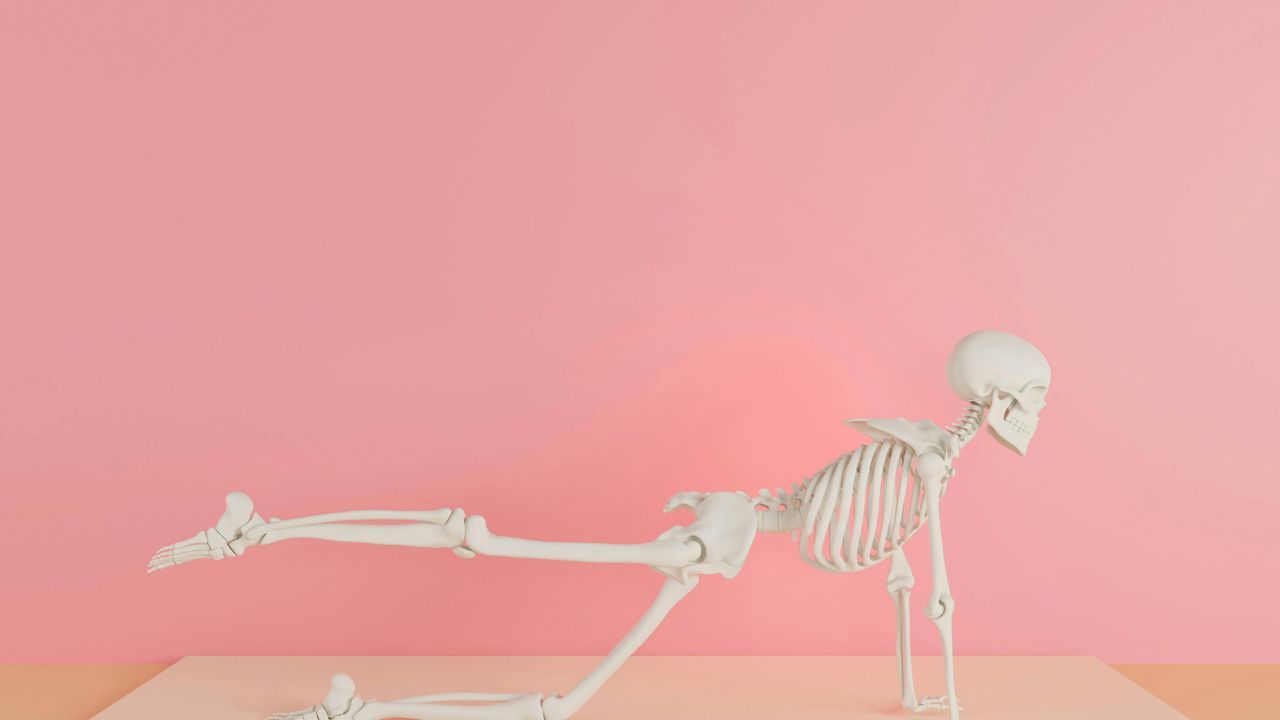
The FOUNDATIONS anatomy and biomechanics
The Foundations of anatomy and biomechanics option is for anyone who feels like they want to leverage a deeper understanding of anatomy, biomechanics (the study of how force and load affect the body), and basic exercise science principles in the studio. When we understand how to manipulate these variables we can confidently guide our clients through intentional programming that helps them meet their goals and keeps them moving for a lifetime.
After this course instructors will understand the application and importance of basic exercise science principles like the SAID principle, Wolff's Law & Davis's Law, be able to look at a muscle and understand its basic movement, understand how load affects movement and be able to apply their knowledge to the body immediately.
What do you get with the FOUNDATIONS option?
- 9 full lectures plus 2 mini lectures
- Fully asynchronous structure
- Lifetime access to use as reference materials that you come back to over and over again
- Access to the AOP community chat where you can connect with pilates instructors globally

The FOUNDATIONS of common pathologies option:
The Foundations of common pathologies option is for new and experienced instructors alike! Whether you want to update your knowledge of common pathologies like frozen shoulder and rotator cuff tears or you've suddenly realized you don't know what to do with the injuries that walk through your door thos course will guide you through the pathoanatomy as well as current evidence-informed best practice for exercise, while staying well within the Pilates instructors scope of practice.
What do you get with the FOUNDATIONS option?
- 6 full lectures plus 2 mini lectures
- Fully asynchronous structure
- Lifetime access to use as reference materials that you come back to over and over again
- Access to the AOP community chat where you can connect with pilates instructors globally
AOP Flagship course FAQs
How is the COMPLETE course structured?
Modules are broken up into body regions: Spine, upper extremity, lower extremity, pelvis, and whole body concepts like joint replacements and working with hypermobility.
Some modules have accompanying movement labs to help you apply concepts presented in lectures to the studio.
How are the FOUNDATIONS courses structured?
The foundations courses are structured similarly to the COMPLETE course: Lecture+ supplemental material broken up into modules focusing on discrete body regions.
Do I have to complete the course in a certain time frame?
No! Once you purchase the course you have access to it forever. The goes for all AOP courses
What if I need more help applying what I learned in any of the AOP courses to the studio?
You can always pair any course with 1:1 mentoring! This is a great way to not only understand how we can bridge the gap between research and practice but also allows you to personalize your AOP course experience and connect with other instructors working in the industry
Are all courses fully asynchronous?
Yes! All evergreen courses are fully asynchronous. Everything can be done on your own time!
Wanna take a peek inside one of the lectures to take a peek at how AOP approaches anatomy?
Check out a course preview here!
What if I already took anatomy. How are AOP courses different?
At AOP we focus more on how anatomy can help us better understand movement. So, rather than memorizing origins, insertions, and actions we talk about how muscles move at different joint angles, how two joint muscles work differently than single joint muscles, how we get stronger, etc. We combine this with a basic understanding of exercise science principles and common pathologies seen in Pilates in 31 lectures and supplemental movement labs to give learners a relevant understanding of how anatomy is useful. We go beyond the textbook and make anatomy a living thing.
Join the newsletter
Get all the AOP news in your inbox monthly and stay up to date with new workshops, courses, and offers.
Join the newsletter. Join the movement
newsletter sign up